
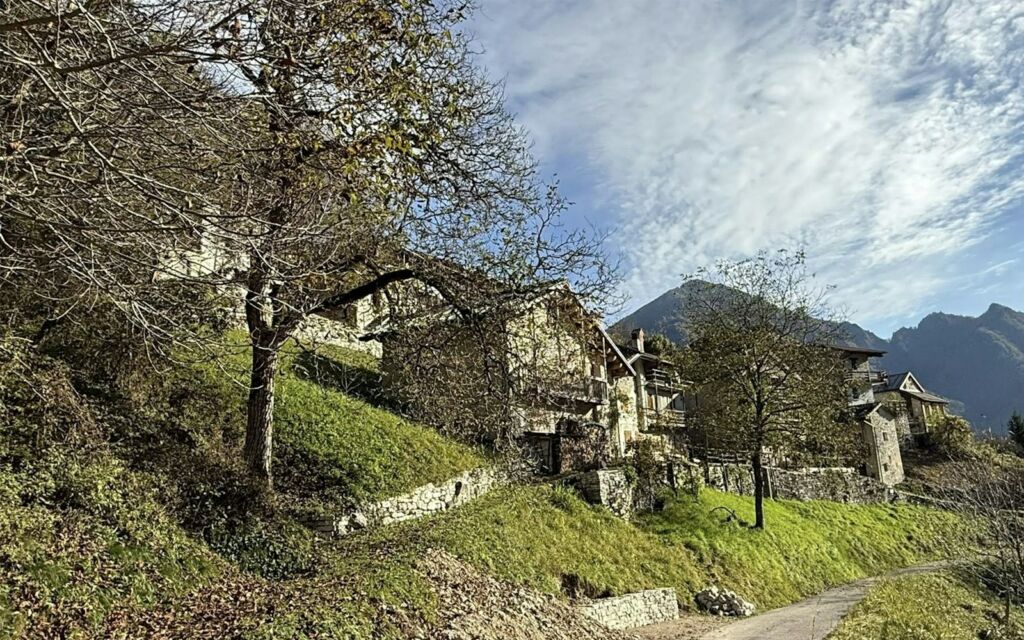
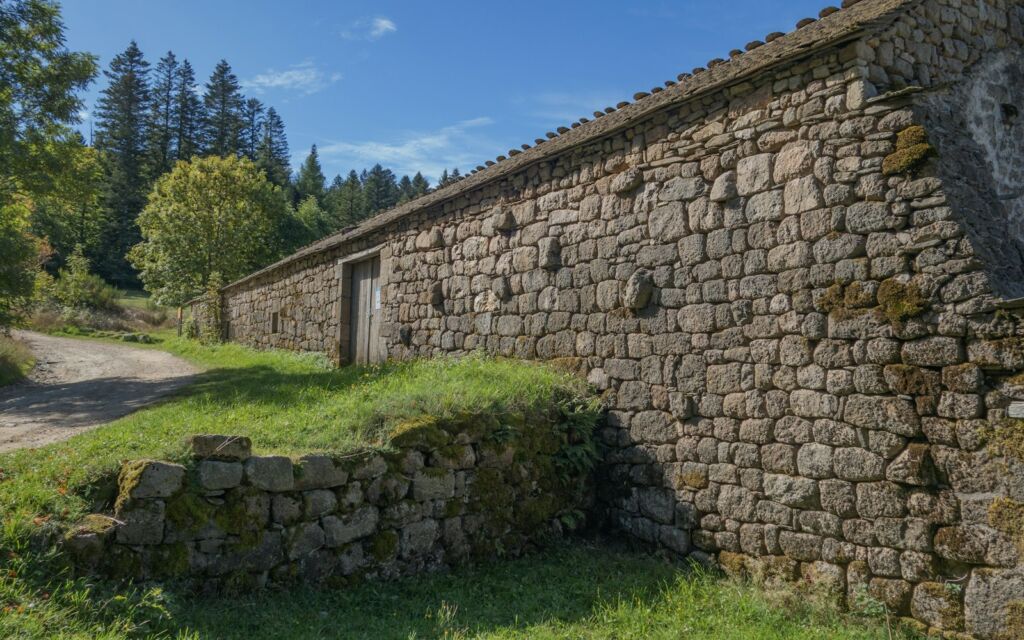
Mountain biking villages are not on the glossy posters. There’s no gondola, no 300-bed hotel, no queue at the lift. Just a handful of stone houses, a café that reopened last spring, a grandmother selling honey at her door – and a web of hand-built singletrack disappearing into the hills behind the church. All over the world, small groups of young locals are building trails around half-empty mountain villages, and riders are following them. What they find at the end of the trail is something no tourist leaflet can sell: real places, real people and real food.
In a nutshell: In depopulated mountain areas, locals are rebuilding old mule paths and shepherd tracks into mountain bike trails. Riders arrive, stay a few nights, eat in local tavernas and sleep in old stone houses – and businesses that had closed open again. No lifts, no big investors: just shovels, volunteers and a lot of local pride. The best part for riders? History, legends, food and a way of life you won’t find in a big resort. Local guides are the key – they turn a ride into a story.
1. Why remote mountain villages need riders
Across Europe and beyond, mountain villages have been emptying for decades. Young people leave for the cities, schools close, the last shop shuts and the old terraces go back to forest. In the Spanish Pyrenees, in the mountains of central Greece, in the Welsh slate valleys and the old mining towns of Tasmania, the story is the same: beautiful places, rich history – and almost nobody left to tell it.
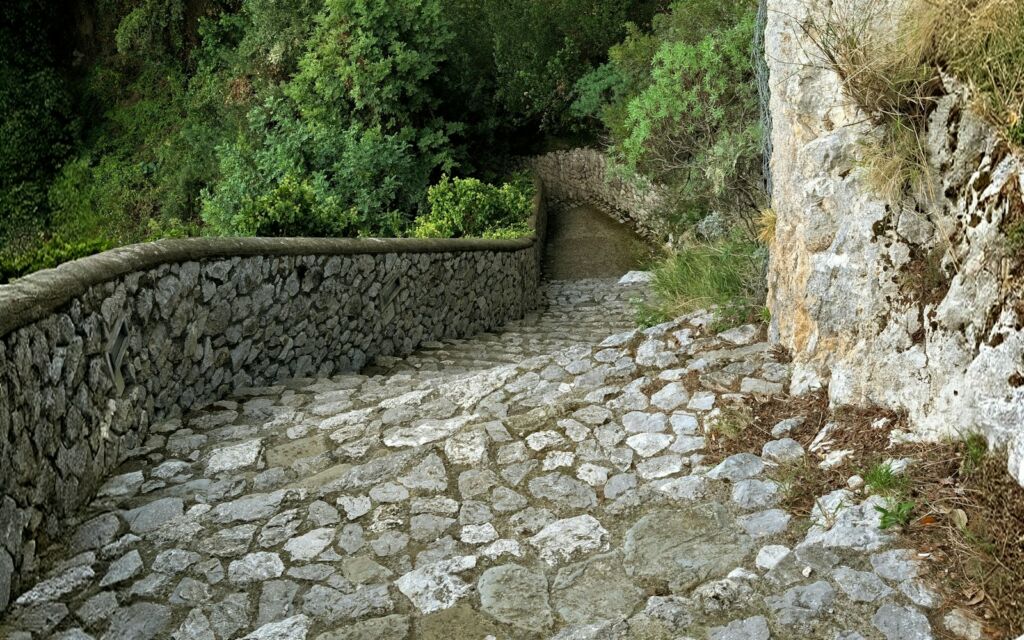
Big ski resorts and bike parks need lifts, investors and millions of euros. These villages have none of that. What they do have is something money can’t build: hundreds of kilometres of old paths. Mule tracks, shepherd trails, pilgrim routes and miners’ paths that connected every village to the next long before there were roads.
And that is exactly what mountain bikers love.
2. How young locals bring trails – and villages – back to life
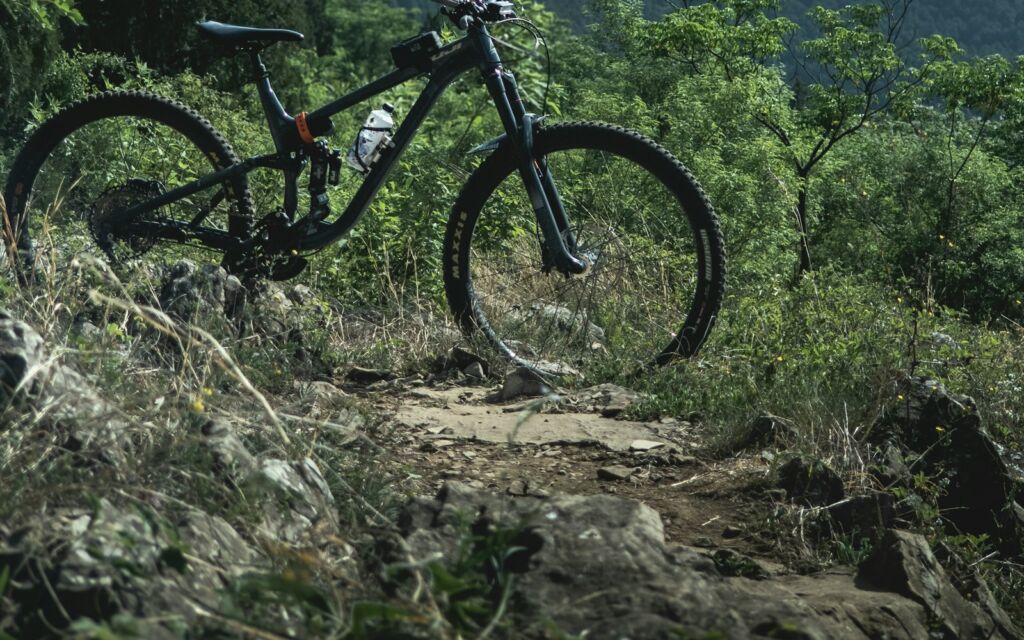
The pattern is surprisingly similar everywhere. A small group of local riders starts clearing an old path. Then another. They build a few berms, add some signs, share a map online. Riders come for a weekend, then come back with friends. Someone opens a room for rent. The old café reopens. A bike shop appears in a former bakery. Someone starts running shuttles in a van.
None of this needs a chairlift. It needs time, shovels and local people who care. And because the trails are built by people who grew up there, they follow the land the way locals know it – past the spring where shepherds stopped, the chapel nobody visits any more, the ridge where the village used to harvest chestnuts.
3. Derby, Tasmania: from tin-mining ghost town to MTB legend
Derby, in north-east Tasmania, was a tin-mining boom town. Tin was found in the area in 1874, and by the late 1800s around 3,000 people lived in the district. Chinese miners were among the first pioneers and at the peak of the rush they outnumbered Europeans – the area had its own joss houses, three brass bands and lively dances in the town hall.
Then came the tragedy that every local still talks about. In April 1929 heavy rain burst the Briseis dam above the town, and the flood killed 14 people. The mine closed for good in 1948, and Derby slowly faded. By the 2021 census, only about 109 people lived there.
In February 2015, the Blue Derby trails opened with around 20 km of singletrack. Today there are more than 125 km of trails, the Enduro World Series has raced there three times, and tens of thousands of riders visit every year. Old shopfronts now house cafés, bike shops and craft beer, there’s a floating sauna on the lake, and the old miners’ cottages are full again. Locals still joke that Derby is “a bit of a ghost town” in the week – but it’s a ghost town with a waiting list for accommodation.
Ride and taste: after the trails, look for local Tasmanian produce – cool-climate wines, cheeses, apples and craft beer – and ask your guide to show you the remains of the old Briseis mine and dam. Local operators such as Into The Wild and Tasmanian Mountain Bike Adventures run guided trips here.
4. Aínsa and Zona Zero, Spanish Pyrenees: 1,000 km of trails between forgotten villages
Aínsa is a medieval walled town in Sobrarbe, high in the Aragonese Pyrenees. Around it lie dozens of villages that were emptied during the 20th century – some when reservoirs flooded the valley farmland, others simply when the young left. From 2005, local riders started reopening the old caminos that once linked these villages. The result is Zona Zero: more than 1,000 km of signed trails across the region, free to ride.
The project is a real community effort. A local craft beer, La Tronzadora, gives part of every bottle sold to trail maintenance, and local guides like One Ride Pyrenees know the network inside out. In 2024, Aínsa was named one of UN Tourism’s “Best Tourism Villages”, and the trail project has been honoured by the Government of Aragón.
The legend: Aínsa is said to be the birthplace of the Kingdom of Aragon. According to legend, in the year 724 a small Christian army led by García Ximénez was facing a Moorish army near the town when a glowing cross appeared above an oak tree – and the vision gave them the courage to win. A small shrine, the Cruz Cubierta, still marks the spot on the edge of town. Every two years (in even years) around 250 locals re-enact the battle in the main square in La Morisma, a tradition dating back centuries.
The food: mountain cooking here is built for hungry riders – ternasco de Aragón (young lamb), migas (fried breadcrumbs with garlic and chorizo), local cured sausages and chiretas, a traditional Sobrarbe dish of rice and meat wrapped in lamb tripe.
5. Blaenau Ffestiniog, Wales: a slate town that built its own bike park
Blaenau Ffestiniog, in the mountains of Snowdonia (Eryri), was once the slate capital of North Wales. At its peak around 12,000 people lived there, and slate from its quarries roofed houses all over the world. When the industry declined, the town shrank, and jobs disappeared.
In 2009, local people set up Antur Stiniog, a community enterprise. With European funding and a lot of local work, they built a downhill bike park on the slate mountainside, which opened in 2012. Today it has 14 downhill trails, uplift, bike hire and a café – and it employs and trains local people. Profits go back to the community.
The culture: this is one of the most Welsh-speaking towns in Wales – around 8 in 10 residents speak Welsh, so you’ll hear it in the café and on the trail. After riding, go underground in the Llechwedd slate caverns to see how the quarrymen worked by candlelight. And try the local food: Welsh lamb, cawl (a hearty lamb and vegetable stew) and bara brith, the spiced Welsh fruit bread – perfect with a cup of tea after the last run.
6. Kravara, Greece: hand-built trails in the mountains of Nafpaktia
Closer to home for many of our riders, the Kravara region in the mountains of Nafpaktia, central Greece, is a perfect example. Stone villages such as Ano Chora and Elatou sit at around 1,000 m among fir and chestnut forests, far from the beaches most visitors know. Here, a small local team has hand-built around 30 km of trails and runs shuttles between the villages – Kravara Bike Park.
The history: Kravara is an old region – its name appears in Ottoman records from 1454. Its rugged mountains were a hideout for klephts, the rebels of the Greek War of Independence, and the Varnakova monastery nearby was besieged during that war. Saint Cosmas of Aetolia studied for two years at the old school of Ano Chora. The village’s old colourful bus, “Karnavalos”, which linked Ano Chora with Nafpaktos until 1983, is still kept in the village.
The food: mountain cooking at its best – wild boar, slow-cooked casseroles, kontosouvli (spit-roasted pork), handmade pies and chestnut pie. In February the villages celebrate the Tsigarithra festival with free barbecued pork, and in October the Chestnut and Tsipouro festival, when the stills are fired up and chestnuts roast in the square.
7. More places where bikes are bringing villages back
- Oakridge, Oregon (USA): a timber town that lost its mills. Today mountain bikers spend an estimated $2.4–4.9 million a year there – around 5% of the local economy.
- The Sobrarbe villages around Aínsa: many abandoned hamlets are now linked by trails, and some old houses are being restored as guesthouses.
- Your own mountains: almost every mountain region has an old network of mule tracks waiting to be ridden – and a local rider with a shovel who dreams of opening it up.
8. Not a resort – and that's the point
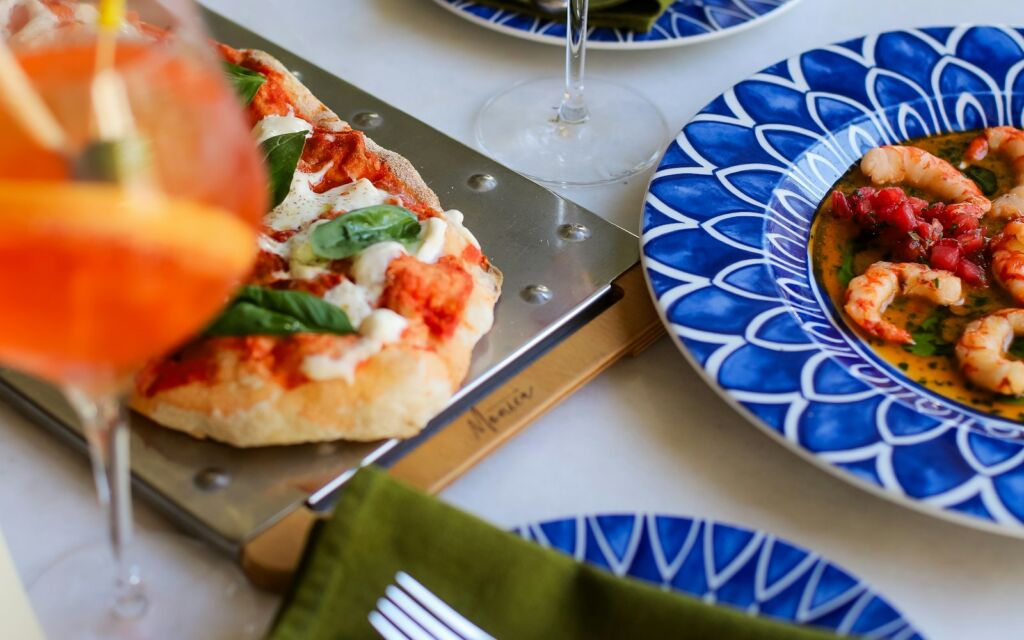
These places will never look like a big bike park, and they don’t want to. There are no razor-sharp machine-built lines with 500 riders a day. The trails are natural, the pace is relaxed and the evenings are long. You ride in the morning, eat a three-hour lunch at the only taverna in the village, and spend the afternoon visiting a chapel, a cheese maker or an old water mill.
For riders, it’s a different kind of trip: less adrenaline-per-euro, more stories-per-kilometre. You come home not with a Strava PR, but with a recipe, a legend and the phone number of a family who invited you in for coffee.
For the villages, every rider is a small vote for staying. A bed rented, a meal ordered, a bike repaired – that’s how a young person can make a living in the village where they grew up.
9. Why a local guide makes all the difference
In a big resort, you can follow signs and colour codes. In remote villages, a local guide is what turns a ride into an experience. A good guide knows which trails are rideable after rain, which taverna cooks today, where the old shepherd’s hut is and why the chapel on the ridge was built. They know the legends, the dialect words and the grandmother who makes the best pies. And they can make sure you ride safely on terrain where help is far away.
That’s why at MTB Guides we focus on certified local guides – people with real qualifications who know their mountains and their people. When you book a guide in a small village, your money stays in that village.
How to ride the villages like a local:
- Say hello – in the local language if you can. “Kalimera”, “Bore dá” or “Buenos días” open doors.
- Eat what’s on the table, not what’s on the menu.
- Close every gate behind you – the sheep will thank you.
- Buy something local: honey, cheese, olive oil or a bottle of homemade liqueur.
- Ask about the old stories. Every village has a legend, a ghost or a hero.
- Stay one night longer than you planned. You won’t regret it.
Find a guide and ride the real mountains
Looking for a mountain bike trip that feels like real travel? Explore Kravara Bike Park in Greece, browse community bike parks or find a certified local guide on MTB Guides – no booking fees, you contact the guide directly. And if you’re a guide building trails in a small village, list your business for free – we’d love to tell your story.
Sources
- Wikipedia – Derby, Tasmania
- CommBank – Derby: from mining town to mountain biking mecca (2025)
- The Examiner – History: a mine of stories
- The Examiner – Pedals are now powering regional revivals
- BIKE Magazin – Zona Zero, the best enduro area in Spain
- UN Tourism – Best Tourism Villages: Aínsa
- Fascinating Spain – La Morisma de Aínsa
- Pinkbike – Antur Stiniog, the community bike park
- Wikipedia – Blaenau Ffestiniog
- Headwaters Economics – Mountain bike tourism in Oakridge, Oregon
- travel.gr – Ano Chora, an authentic mountain destination in Greece
- Proto Thema – Kravara and the Kravarites (in Greek)
#Greece #Local culture #Mountain biking trends #Mountain villages #MTB travel #Rural tourism #Spain #Tasmania #Trail Building #Wales