
Same mountain, same chairlift, same mountain hut – but this time there’s a bike hanging off the chair instead of a pair of skis. If you ski in winter and ride in summer, you have probably noticed it too: every year there are a few more bikes on the chairlift, a few more trail builders on the slopes in June, and a few more ski towns calling themselves “four-season destinations”. So is mountain biking replacing skiing? The honest answer is more interesting than a simple yes or no – but the shift is real, and it is changing the mountains we love.
The short answer:
- Winters are getting shorter and less reliable, especially at lower altitudes.
- Ski resorts are investing in bike parks and trails to keep lifts, hotels and restaurants busy all year.
- New trails are built for families and beginners, not just downhill racers.
- E-MTBs are bringing a whole new crowd up the mountain.
- Skiing isn’t dead – but in many places, mountain biking has become the second season, and in some it has already taken over.
1. Winter is getting shorter – and less predictable
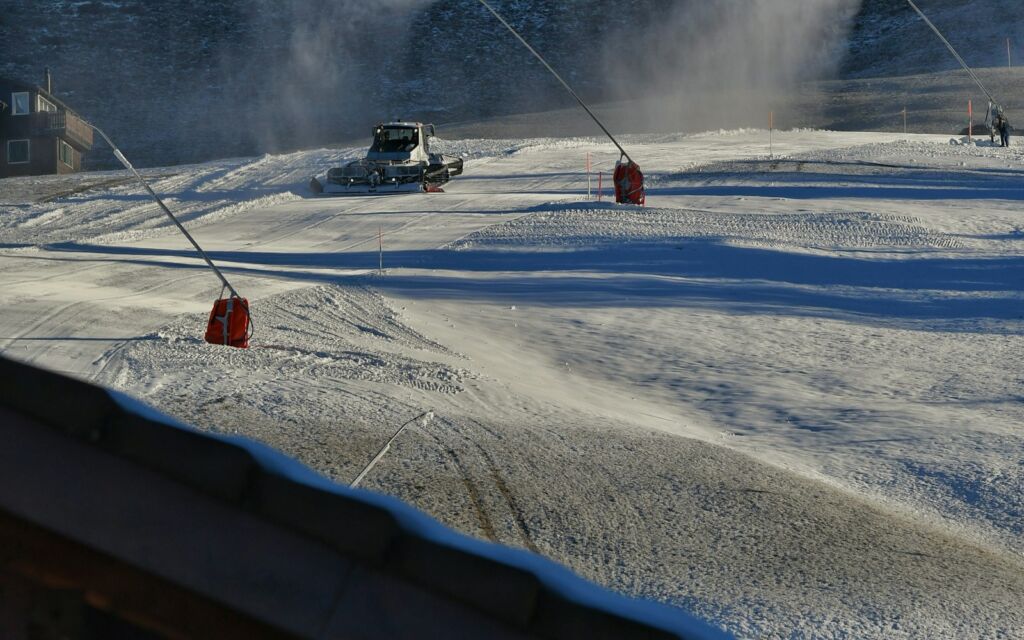
Ski resorts were built on one promise: reliable snow. That promise is getting harder to keep, especially lower down. In Switzerland, a slope needs roughly 30 cm of snow for about 100 days to be worth grooming and running, and resorts below around 1,600 m are the most exposed. Swiss media count 167 ski areas that have already closed, with dozens of abandoned lifts left rusting on the hillsides. Some, like Monte Tamaro and Les Paccots, have stopped skiing altogether.
France has heard the same warning from the very top. In February 2024 the Cour des comptes – France’s national audit court – described the French ski model as “running out of steam”.
The court predicted that every resort will be affected by climate change by 2050, with only a few likely to keep going beyond that, and called on authorities to stop pouring public money mainly into snow cannons and to fund year-round, diversified mountain tourism instead.
Experts quoted around the report put the danger zone clearly: alpine skiing below about 1,500 m faces a very uncertain future, and slopes below about 1,800 m will become increasingly hard to run in the 2030s.
Around 150 French ski areas have already closed in the last 20 years, and low resorts such as Alpe du Grand Serre, Le Lioran and Ventron have struggled to find the money to keep their lifts turning.
The pattern is the same across the border: of 65 lifts that have closed in Switzerland, 26 were below 1,500 m – and only four were above 2,000 m.
The money isn’t disappearing from the mountains – it is moving. High, snow-sure resorts keep investing (Serre Chevalier has invested in a new gondola, with its operator insisting people will “still ski in 2050”), while lower resorts are pushed to find a future beyond snow. And that future very often has two wheels.
In the US, the story is similar at the small end of the market: well over 1,600 ski areas have closed since the 1960s, especially small, low-lying hills in the Northeast and Midwest. And even big resorts feel it in bad years – after a warm, thin winter in 2025/26, western North American resorts saw winter lodging occupancy fall 7%, with April almost 22% down in revenue.
Whole valleys depend on those visitors: the hotels, restaurants, ski schools, bike and ski shops, mountain huts and the families who run them. When the snow fails, the question is simple – what keeps the lifts turning and the beds full?
2. Summer is the new second season
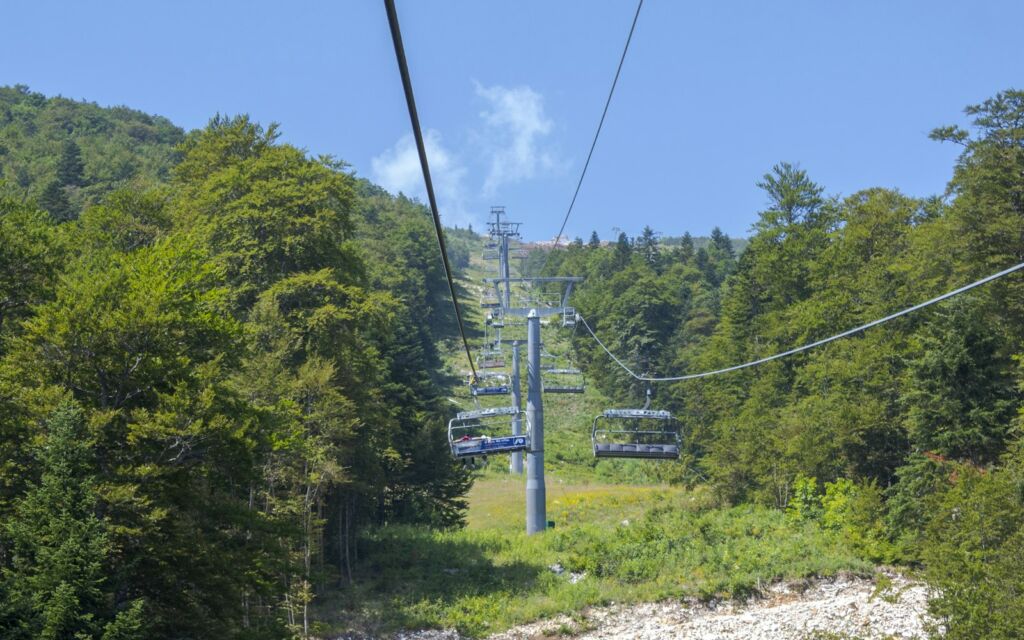
More and more, the answer is summer – and mountain biking is at the heart of it. In North America, the number of ski areas running summer operations grew from 84 in 2014 to 109 in 2023, and average summer revenue per area rose about 71%. Around 80% of ski areas surveyed by the National Ski Areas Association now offer summer activities. In the US the shift is so clear that in 2026 the Forest Service dropped its old rule that a ski area must earn most of its money from snow sports, citing “significant fluctuations in seasonal snow conditions”.
The demand is there too. While winter 2025/26 struggled, summer 2026 bookings in the same western resorts were pacing ahead of last year, with projected summer revenue up about 11%. People who missed their mountain “fix” in winter came back in summer – many of them with a bike.
In the Alps it is the same picture. Les Gets in the Portes du Soleil now offers around 128 km of marked bike park trails and three lifts running all summer, linked to a network of roughly 650 km of MTB routes across France and Switzerland. Swiss destinations openly promote mountain bike holidays as part of their climate strategy. And in Australia, Mystic Bike Park in Bright is being transformed by trail builders Dirt Art’s operating company with plans for dozens of kilometres of new trails, bike hire, a bike school and a café.
3. Trail builders are thinking about families, not just DH riders
The early bike parks were built by and for gravity riders: steep, rooty, full-face-helmet terrain. That crowd is still there – and they still have World Cup tracks to chase – but resorts have realised that a mountain full of black runs will never replace a winter of family ski holidays.
So the trail-building playbook has changed. Today’s bike parks invest heavily in green and blue flow trails, skills areas, pump tracks and kids’ zones, beginner lessons and rental fleets. Mystic’s master plan explicitly includes new trails for families, kids and adaptive riders. In Serre Chevalier, a new green trail from the top of the mountain lets beginners enjoy a full descent. It is the same logic that made skiing a mass-market holiday: easy, progressive terrain, good teaching, and a reason for the whole family to come back next year.
4. The e-MTB effect: everyone can climb now
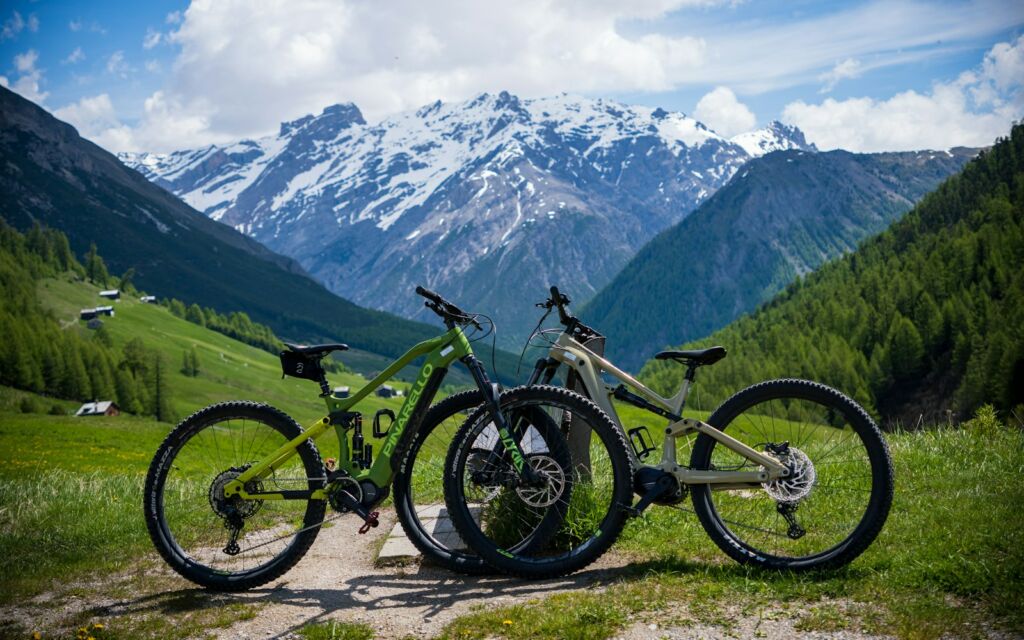
If one thing has accelerated the shift, it is the electric mountain bike. Climbing used to be the filter that kept many people out of mountain biking. E-MTBs remove that filter. Suddenly, the parent who hasn’t ridden in years, the skier who only wants a few hours out, or the group with mixed fitness can all ride the same trails together.
The numbers are striking. In Germany, Europe’s biggest bike market, around 741,000 e-MTBs were sold in 2025 – compared with only about 52,500 non-electric mountain bikes. That is roughly 14 electric mountain bikes for every analogue one. Resorts have noticed: e-bike rental, charging points, e-MTB tours and “uplift-free” trail networks are now part of almost every summer offer.
For guides, this is a huge opportunity. A guided e-MTB day lets a local guide take beginners, families and older riders to places they would never reach on their own – the high ridges, mountain huts and singletrack that used to be reserved for the fittest riders.
5. So – is mountain biking replacing skiing?
Not yet – and probably not everywhere. Winter is still the most profitable season for most ski resorts, and in a good year skiing is booming: US ski areas recorded 61.6 million visits in winter 2024/25, the second-highest on record, and operators keep investing billions in lifts and snowmaking. High-altitude, snow-sure resorts will keep skiing for a long time. And summer is not a magic fix: summer guests spend less per day, and in North America summer still makes up only around 12% of ski-area revenue.
Mountain biking can’t save every resort either. In the Vosges, the lift operator at Lac Blanc decided in 2026 to stop running its lifts after the season, closing a much-loved bike park along with the skiing. Bikes help, but they need lifts, trail crews, insurance and investment – exactly what struggling resorts often don’t have.
What is happening is a rebalancing. For lower and mid-altitude resorts, mountain biking is becoming the second pillar that keeps the valley alive: the reason the gondola runs in July, the hotel opens in September and the ski instructor works as a bike guide in summer. In some places – former ski hills in New Hampshire, Michigan or Wisconsin that now live entirely from bikes – mountain biking has already replaced skiing completely. Highland Mountain Bike Park in New Hampshire, once a small ski hill, is now one of the best-known bike parks on the East Coast.
Skier or rider? Spot the difference:
- Skiers check the snow report. Riders check the trail report.
- Skiers queue for the chairlift with boots that won’t bend. Riders queue with knee pads that won’t stop squeaking.
- Both end the day at the same mountain hut – and both say “one more run” at least three times.
6. What it means for riders – and for the mountains
For those of us who love both, it is good news: more trails, better lifts in summer, more places to learn, and more local guides who know these mountains in every season. But it also brings responsibility. Busy summer trails need good design, respect for walkers and wildlife, and riders who stay on the trails and support the people who build them.
The mountains are not choosing between skis and bikes. They are learning to live from both. And with every new flow trail, every e-MTB rental fleet and every ski instructor who becomes a summer bike guide, mountain biking is taking a bigger share of the mountain.
Ride the mountains with a local guide
Want to explore the summer side of your favourite ski resort? Find bike parks such as Les Gets Bike Park, Serre Chevalier Bike Park or Mystic Bike Park, or book a certified local guide on MTB Guides – no booking fees, you contact the guide directly.
Photos: Unsplash (Unsplash License).
Sources
- SWI swissinfo.ch – Five ways Swiss ski resorts are fighting for survival (Feb 2026)
- Singletracks – Over 1,600 US ski resorts abandoned, many reborn as MTB trails (Jan 2026)
- The Ski Guru – Can summer tourism save mountain resorts? (May 2026)
- Ski Area Management – The challenges of selling summer (July 2025)
- KUNC – Ski resorts gain year-round adaptability in Forest Service rule (Apr 2026)
- BIKE Magazin – Thirteen to one: e-MTB vs MTB sales in Germany (2025 data)
- The Storm Skiing Journal – Is climate change killing skiing? (Jan 2026)
- Flow Mountain Bike – Mystic Park master plan
- Weka – Cour des comptes report on French ski resorts and climate change (Feb 2024)
- PisteHors – French ski resorts on the brink (Feb 2024)
- Le News – The Swiss ski resorts on death row (Nov 2023)
- Mon séjour en montagne – New Serre Chevalier gondola: “In 2050 we will still ski”
#Bike Parks #Climate change #E-MTB #Mountain biking trends #Ski resorts #Snow sports